


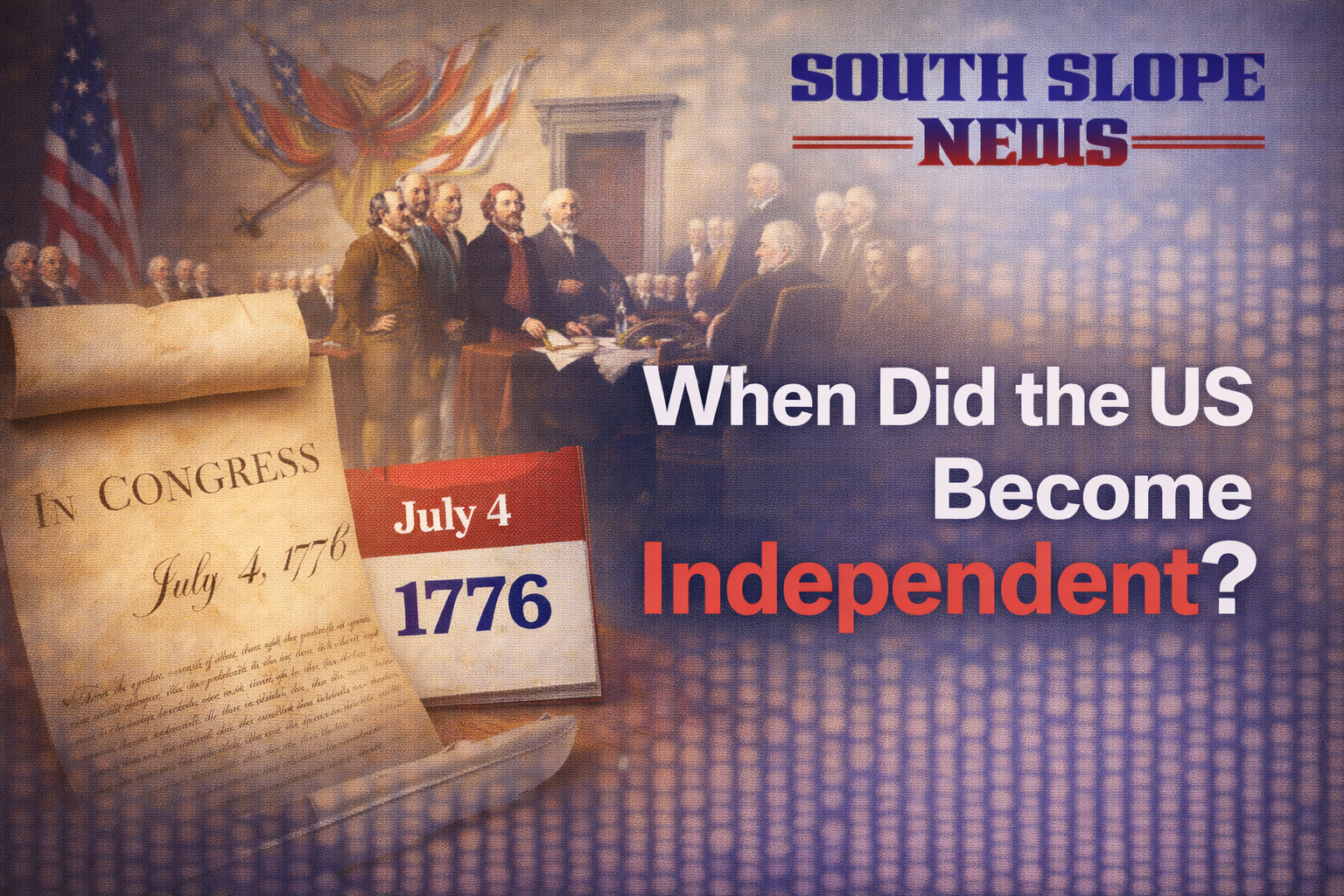
When did the US become independent is a question that many people ask when they begin exploring American history, and the answer lies in a powerful story of courage, resistance, and profound change. You will learn that independence was not a single moment but a process that unfolded through political conflict, philosophical debate, and military struggle.
This article takes you through the events that led up to independence, the formal declaration, the war that made it real, and how the United States emerged as a sovereign nation. By understanding when and how independence occurred, you will gain a deeper appreciation for the values and struggles that shaped the United States you know today.
When Did US Become Independent
Understanding the Road to Independence
When did the US become independent cannot be answered without first understanding the deep frustrations American colonists faced with British rule. For years, you would see growing resistance to policies that taxed and regulated the colonies without their consent, and this lack of representation became central to clashes between colonists and the British Crown.
As tensions rose through events like the Stamp Act, the Boston Massacre, and the Boston Tea Party, your sense of American identity began to diverge sharply from loyalty to Britain, setting the stage for a formal break. These early conflicts were not isolated incidents but part of a larger pattern of dissatisfaction that made independence seem not only desirable but inevitable.
The Declaration of Independence: July 4, 1776
When did the US become independent in a legal and symbolic sense is most commonly tied to July 4, 1776, when the Continental Congress adopted the Declaration of Independence. On this momentous day, representatives from thirteen colonies voted to proclaim that they were no longer subject to British rule and were now free and independent states.
This was not just a political announcement but a bold assertion of universal principles, stating that all people are created equal with certain unalienable rights, and that governments derive their power from the consent of the governed. The adoption of this document marked a definitive and public break from Britain’s authority and became the philosophical heart of the new nation.
Key Figures Behind Independence
You need to recognize the people who shaped the independence movement, and among them, Thomas Jefferson stands out as the principal author of the Declaration of Independence. Alongside John Adams, Benjamin Franklin, Roger Sherman, and Robert Livingston, Jefferson crafted language that articulated deep Enlightenment ideas about natural rights and the role of government.
Their collaboration ensured that the Declaration would serve not just as a statement of separation, but as a manifesto of the values the new nation would hold dear. These figures were deeply influenced by philosophical currents of their time, and their work helped ensure that independence was grounded in ideals that would resonate far beyond the battlefield.
The Role of the American Revolution
When did the US become independent depends heavily on understanding the American Revolution, which was the military and social conflict that made independence a reality. Beginning in 1775 with the battles at Lexington and Concord, the Revolutionary War was fought over the next eight years as colonial militias, and later the Continental Army, battled British forces for control of territory and political authority.
General George Washington’s leadership was a unifying force for the Continental Army, and his strategic victories helped sustain the revolutionary cause during the long conflict. Without success on the battlefield, the declarations of independence and philosophical claims would have remained aspirational rather than transformative.
Battles That Defined the Fight for Freedom
When did the US become independent was not decided on a single battlefield, but several crucial confrontations shaped the course of the war. Early engagements tested the resolve of both British and colonial forces, but it was battles like Saratoga in 1777 that demonstrated that American forces could win against the British and helped secure international support.
In fact, foreign alliances were pivotal, and you may find it interesting how naval and military cooperation intensified, a theme explored in discussions about the evolution of naval forces and discussions bothering on questions such as are the Marines part of the Navy?. International support, particularly from France, provided resources, troops, and naval power that were critical to challenging British military dominance. These engagements built momentum toward eventual victory and made independence possible in practice, not just in principle.
The Treaty of Paris: Formal Recognition
When did the US become independent in the eyes of the world was finalized with the Treaty of Paris in 1783, which formally ended the American Revolutionary War and recognized the sovereignty of the United States.
Though the Declaration of Independence set the philosophical and political foundation in 1776, it was the ratification of this treaty that secured international legitimacy for the new nation. Britain’s acknowledgement of American independence allowed the United States to enter the global community as a recognized nation with full rights to govern itself and establish diplomatic relations.
This moment cemented the achievement of independence through negotiation and reaffirmed the sacrifices made on the battlefield.
The New Nation: Challenges After Independence
When did the US become independent marked a beginning, not an ending, of immense challenges for the new nation, as you would find with any nation forging its identity. After independence, the United States faced the task of forming a government, balancing the competing interests of states and individuals, and defining citizenship and rights for a diverse population.
These early years were marked by debates about federal power, economic policy, and how to protect the liberties fought for during the revolution. The Constitutional Convention of 1787 and the eventual ratification of the U.S. Constitution reflected the need to build a framework that could sustain unity while preserving the principles that justified independence in the first place, and this continuing evolution defined what it meant to be a truly independent nation.
How Independence Shaped American Identity
When did the US become independent influenced how Americans saw themselves and how others perceived the fledgling country abroad. Independence created a sense of shared purpose, rooted in ideals of freedom, self-determination, and resilience, and these values became central to American national identity.
Over time, this identity expanded beyond the original thirteen colonies as the United States grew westward, incorporated diverse populations, and wrestled with contradictions between freedom and inequality. The legacy of independence thus fueled national narratives about opportunity and rights, even as it prompted critical reflection on how fully those ideals were realized for all people.
Independence and Its Global Influence
When did the US become independent did not only matter to Americans but had profound effects around the world, inspiring other movements for self-government and democracy. The philosophical foundations laid out in the Declaration influenced later revolutions and reforms, encouraging people in other countries to question absolute rule and fight for their own rights.
The success of the American Revolution offered a powerful model of resistance and nation-building that echoed through Europe and Latin America in the decades that followed. As a result, the United States became a symbol of the possibility of republican government and individual rights, shaping global political thought in lasting ways.
Reflection: What Independence Means Today
When did the US become independent remains a foundational question for understanding the modern United States, and its answer reminds you that independence was both an event and a process. It began with philosophical ideas about human rights, took shape in legislative and political declarations, and was secured through military struggle and international negotiation.
Today, the meaning of independence continues to evolve as Americans reflect on how the principles of freedom and equality apply to all members of society. You might find useful parallels in discussions on leadership and governance such as Kevin McCarthy’s life after Congress where historical roles influence present political dynamics, showing how the legacy of independence still frames national discourse and civic responsibility.
Conclusion
When did the US become independent is a question that unfolds across years of political debate, military conflict, and social change, but it is clear that the journey culminated in enduring freedom.
Beginning with mounting resistance, reaching a symbolic peak with the Declaration on July 4, 1776, and achieving formal recognition with the Treaty of Paris in 1783, independence transformed thirteen disparate colonies into a unified nation.
The impact of independence continues to shape American identity, governance, and global influence, reminding you that the birth of the United States was both a profound moment in history and an ongoing legacy of liberty and democratic ideals.